Many DeFi users assume that disconnecting a wallet from a website revokes the permissions they granted to it. It does not. A connection controls communication between an application and a wallet interface; a token approval is a separate on-chain authorization. If that approval remains active, a contract may still be able to move the approved token amount according to the rules encoded in the approval. The practical lesson is uncomfortable but useful: wallet security is not only about protecting a seed phrase. It is also about understanding, reviewing, and reducing permissions.
This distinction matters for anyone using decentralized exchanges, lending markets, bridges, yield platforms, or NFT applications in the United States and elsewhere. A browser wallet extension can make signing transactions easier, but convenience does not remove the need for judgment. The better question is not whether a wallet “looks safe.” It is whether the user can see what authority a transaction creates, what that authority depends on, and how to withdraw it later.
Approval Is Not the Same as a Transaction
To understand the risk, start with the mechanism. Many ERC-20 tokens use an approval function that lets a smart contract spend tokens on a holder’s behalf. A decentralized exchange, for example, may ask a user to approve its router contract to spend a particular token before the swap can occur. The later swap is a separate transaction. The approval establishes authority; the swap uses that authority.
This creates a mental-model problem. Users often think of approval as a one-time checkout confirmation, similar to authorizing a card payment. In reality, some approvals are allowances that remain valid until they are reduced or revoked. They may cover a fixed amount, or they may use a very large allowance intended to avoid repeated approval transactions. The latter can be convenient, but it also increases the potential exposure if the approved contract is compromised, malicious, incorrectly configured, or called through a deceptive website.
There is an important boundary condition: an approval does not automatically give every actor control of a wallet. Its effect is constrained by the token contract, the approved spender, the allowance amount, and the logic of the spender contract. That limitation is why it is inaccurate to describe every approval as an instant loss of funds. Yet the permission can still become dangerous when those conditions align unfavorably. Security analysis should therefore focus on authority and pathways, not on dramatic labels.
Nor does disconnecting a site necessarily solve the problem. Disconnecting may stop the application from reading wallet information through the current browser session, but it generally does not alter an approval already recorded on the blockchain. Revocation is an on-chain action that changes the allowance. It may require gas, and it must be performed on the network where the approval exists. A user with approvals on Ethereum, a layer-2 network, and a sidechain has separate permission states to review.
What a Careful Wallet Workflow Should Reveal
A security-conscious wallet experience should help users examine more than the destination address. Before signing, the user should ask: Which contract will receive authority? Which token is involved? Is the allowance limited or effectively unlimited? What network is active? Does the transaction call match the action the website described? These questions are more informative than a simple green-or-red safety badge.
Transaction simulation and risk warnings can improve this process by translating contract calls into a more understandable preview. They may help identify an unexpected token transfer, a suspicious spender, a failed transaction, or a change in asset balances. Such features are valuable because raw calldata is difficult for most people to interpret. Still, they are aids rather than guarantees. A simulation reflects the assumptions and available information at the time of review; it cannot prove that a contract is economically sound, that its upgrade path is harmless, or that a website’s entire user interface is trustworthy.
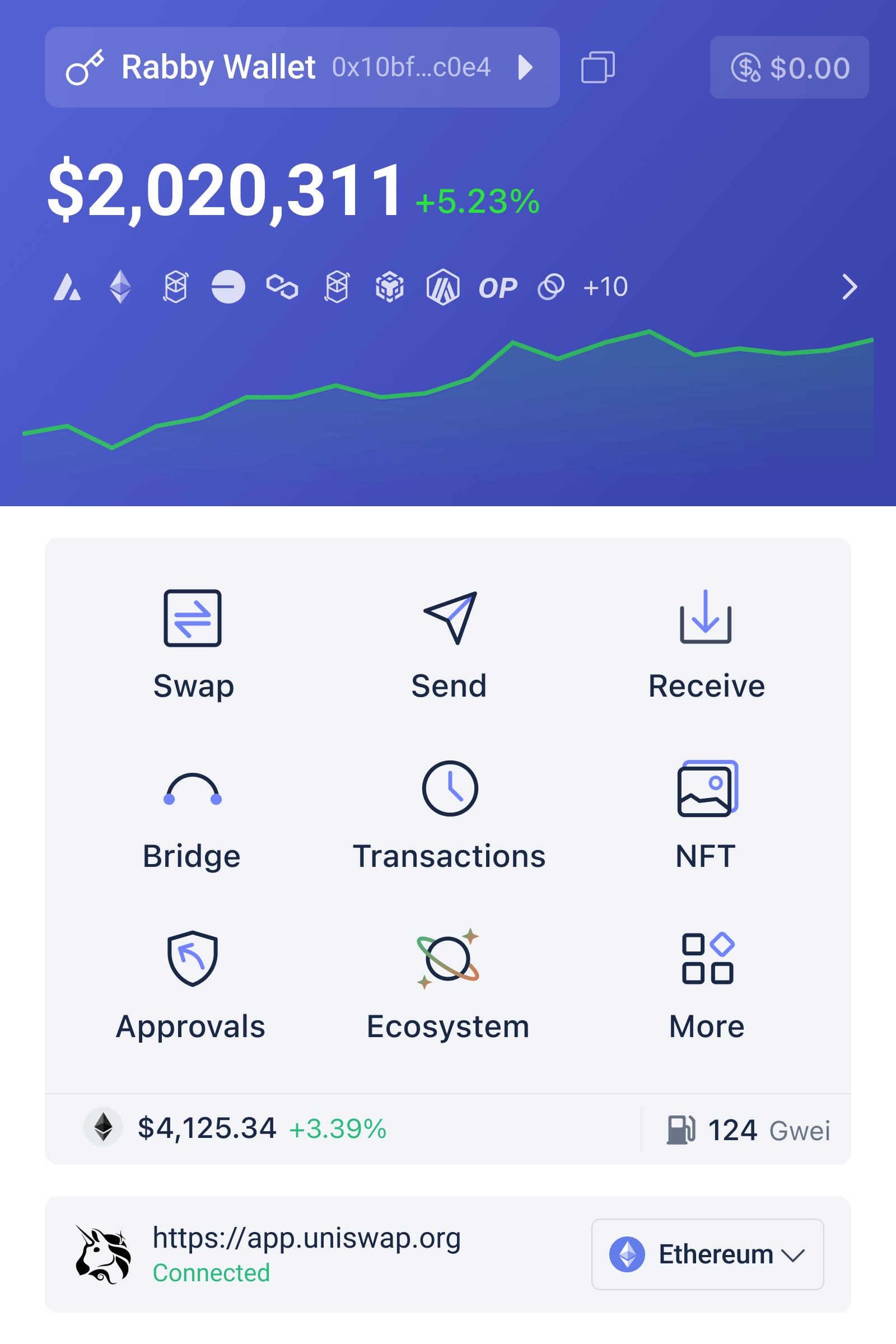
That is where a browser wallet such as Rabby can be useful as an inspection layer rather than merely a signing window. Users considering the rabby extension download should obtain the extension from a source they independently trust, verify that the installation is genuine, and treat any displayed warning as a prompt for investigation rather than an automatic verdict. The wallet can improve visibility, but the user remains responsible for checking the network, application, contract, and requested permission.
Token approval management is best understood as permission hygiene. Before using a new protocol, consider whether a limited allowance is sufficient. After a short-lived interaction, review whether the permission is still needed. If a protocol has been abandoned, if its website has changed unexpectedly, or if the approved contract is unfamiliar, reducing or revoking the allowance may be sensible. This does not eliminate every risk: revoking the wrong approval, using a fake revocation site, or signing a malicious “revocation” transaction can create new problems. The management tool itself must be treated as an application that can request transactions.
The trade-off between safety and friction
Unlimited approvals are not always evidence of malicious design. Some protocols use them to reduce repeated approvals and save users additional transactions and network fees. Limited approvals provide tighter control but can require more signatures and more gas. For an active trader, repeated approvals may create operational friction and more opportunities to approve the wrong transaction. For a long-term holder interacting rarely, tighter permissions may be worth the inconvenience.
The right choice depends on exposure, not ideology. A small, infrequent interaction with a well-understood contract presents a different decision from granting a large allowance to an unfamiliar application while holding a substantial balance. Users should also distinguish between the amount being spent now and the amount the contract may spend later. That difference is easy to overlook because both actions can appear in a familiar wallet workflow.
Common Myths, Replaced with Better Rules
Myth: “A popular protocol cannot be dangerous.” Popularity can reduce some uncertainty, but it is not a security guarantee. Smart contracts can contain bugs, dependencies can fail, front ends can be compromised, and users can be directed to counterfeit websites. Reputation is one input, not a substitute for reviewing the transaction.
Myth: “A hardware wallet makes approvals safe.” Hardware wallets are powerful defenses against remote theft of private keys, but they do not make a user’s signature wise by default. If a user approves a harmful contract on a hardware wallet, the device may faithfully protect the key while still authorizing the transaction. Key protection and permission review solve different problems.
Myth: “Revoking everything is always best.” Revocation reduces some forms of residual authority, but it has costs and limits. It consumes network resources, does not undo transfers that already occurred, and does not protect against a malicious transaction signed later. A sensible review prioritizes high-value tokens, unfamiliar spenders, old or unused protocols, and allowances that are much larger than the user’s intended exposure.
Myth: “The wallet warning tells me exactly what will happen.” Warnings are interpretations of transaction data and risk signals. They can be highly useful, especially when they expose a mismatch between the expected action and the actual call. But contract behavior can be complex, proxy contracts can change implementation, and economic risks may not appear as a simple token-transfer warning. A clear preview should increase confidence only when it matches the user’s independent understanding.
A Reusable Approval Review Framework
Before signing, classify the request across four dimensions: identity, authority, scope, and reversibility. Identity asks whether the website and contract are the ones the user intended to use. Authority asks what the contract can do. Scope asks which asset, network, and amount are involved. Reversibility asks whether the permission can be reduced later and whether the transaction itself can be undone. If any answer is unclear, pausing is a rational security action.
After signing, record what was authorized rather than relying on memory. Review approvals periodically across every network used. This is particularly important for US users who may move between major chains and layer-2 networks through a single browser interface: a clean approval list on one network says nothing about permissions on another. Separate networks mean separate contract states, balances, fees, and revocation actions.
The near-term direction of wallet security will likely depend on how well interfaces communicate authority without overwhelming users. If simulations become more precise and approval dashboards become easier to interpret, users may make fewer blind signatures. If warnings become too frequent or vague, users may learn to dismiss them. The signal to watch is not the number of alerts, but whether the interface helps people distinguish a routine allowance from a materially broader permission.
Frequently Asked Questions
Does disconnecting a DeFi website revoke token approvals?
Usually, no. Disconnecting affects the wallet-to-website session, while an approval is an on-chain allowance granted to a token-spending contract. To change that allowance, the user generally needs a separate on-chain transaction that reduces or revokes it on the relevant network.
Should I use limited approvals instead of unlimited approvals?
Limited approvals reduce the amount a contract can spend if something goes wrong, but they may require additional transactions and network fees. The practical choice depends on the value at risk, how often the protocol is used, the user’s confidence in the contract, and the cost of repeated approvals.
Can a wallet extension prevent every DeFi security problem?
No. A wallet can improve transaction visibility, display warnings, and make permission management more accessible, but it cannot guarantee that a protocol, website, contract, or economic strategy is safe. Users still need to verify what they are signing and limit authority where practical.
The most durable security habit is simple: treat every approval as an authorization decision, not as a harmless preliminary click. A wallet extension can make that decision clearer, but security ultimately comes from matching the permission to the task, the amount, and the trust actually justified by the situation.
 Previous Post